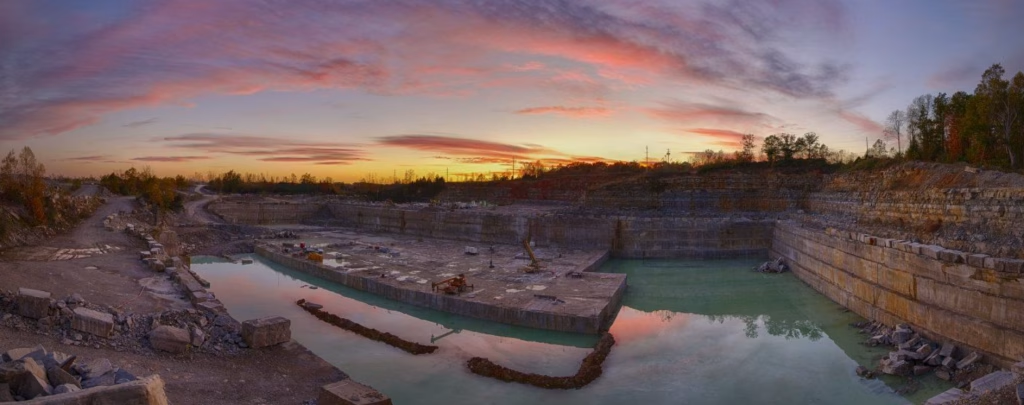
Indiana Limestone has been a defining material in North American architecture for nearly two centuries. Quarried from the rich limestone deposits of south-central Indiana, it has been used for everything from early homes and courthouses to some of the most recognizable buildings in the United States and Canada.
Known for its consistent colour, fine grain, durability, and workability, Indiana Limestone became one of North America’s most important building stones. Its history is also a story of railroads, craftsmanship, generations of quarry families, and an industry that continues to evolve today.
The Beginning of Indiana Limestone
Indiana’s limestone industry began on a small scale in the early 19th century. Local limestone was initially gathered from exposed outcrops and used by settlers for foundations, homes, window and door sills, and other basic construction purposes.
In 1827, Richard Gilbert opened a commercial limestone quarry near Stinesville, Indiana, marking one of the earliest organized quarrying operations in the region.
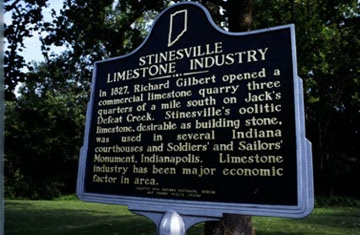
IHB. (2020, December 7). Stinesville Limestone Industry. IHB. https://www.in.gov/history/state-historical-markers/find-a-marker/stinesville-limestone-industry/
What began as a local industry grew rapidly throughout the 19th century. The expansion of railroads was particularly important, allowing large blocks of Indiana Limestone to be transported from the quarries to growing cities throughout the country. At the same time, new quarrying and finishing technologies made it possible to extract, shape, and ship significantly greater quantities of stone.
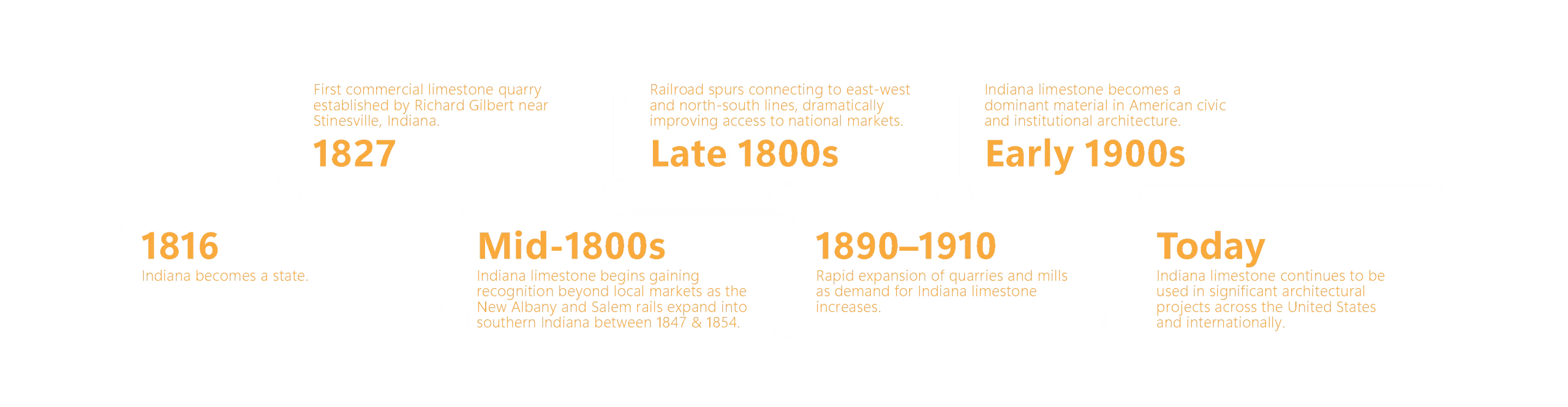
The rise of Indiana (Salem) limestone - Indiana Limestone Institute of America. (2026, July 25). Indiana Limestone Institute of America. https://indianalimestone.org/origins/the-rise-of-indiana-salem-limestone/
By the late 1800s, Indiana Limestone had become an important part of the country’s construction industry. Its light colour and ability to be precisely carved made it especially well suited to the Beaux-Arts, Neoclassical, and other architectural styles that were becoming popular across North America.
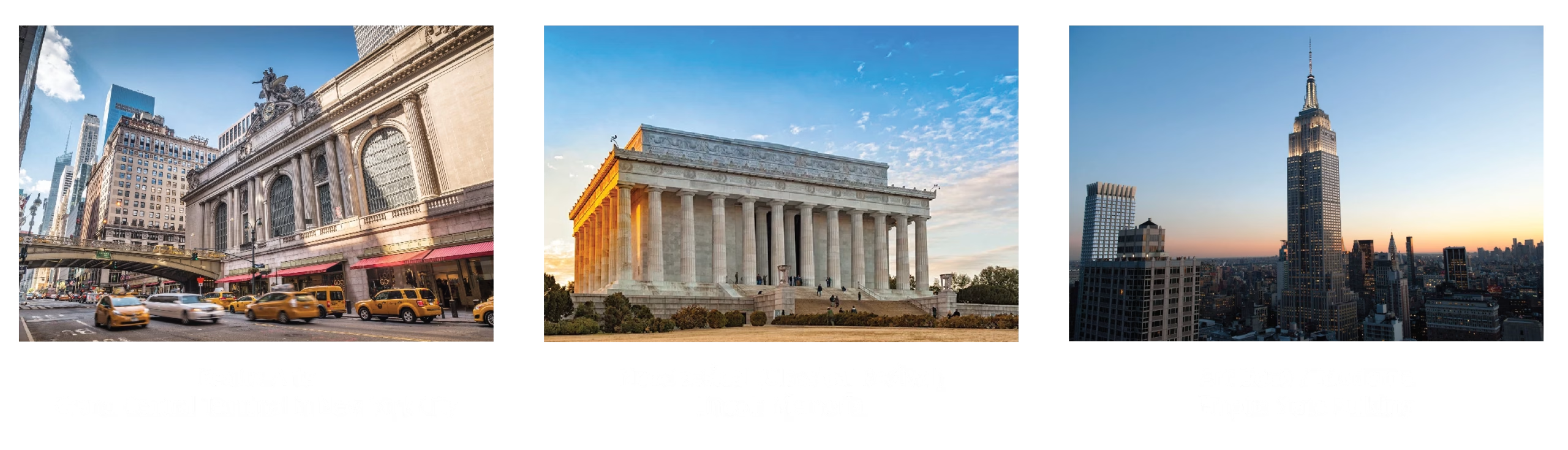
Empire State Building. (2022). Facts & figures | empire state building. Www.Esbnyc.Com. https://www.esbnyc.com/about/facts-figures

Grand Central Terminal Station in New York. (n.d.). Hoteles.Com. Retrieved https://www.hoteles.com/go/usa/grand-central-terminal-station

Lincoln Memorial. (n.d.). History Hit. Retrieved September 14, 2026, from https://www.historyhit.com/locations/lincoln-memorial/
An Industry Built by Generations
Behind Indiana Limestone’s history are the families who have spent generations working in its quarries.
Quarrying is more than simply removing stone from the ground. It requires an understanding of the geological characteristics of a deposit, knowledge of how the stone behaves during extraction and fabrication, and experience that is often passed from one generation to the next.
Reed Quarries is one of the best examples of this tradition. The Reed family’s involvement in stone can be traced back generations, and Reed Quarries continues to operate as a family business today. The company describes its history as extending across seven generations of stone men, with roots reaching back to quarries in England before 1850.
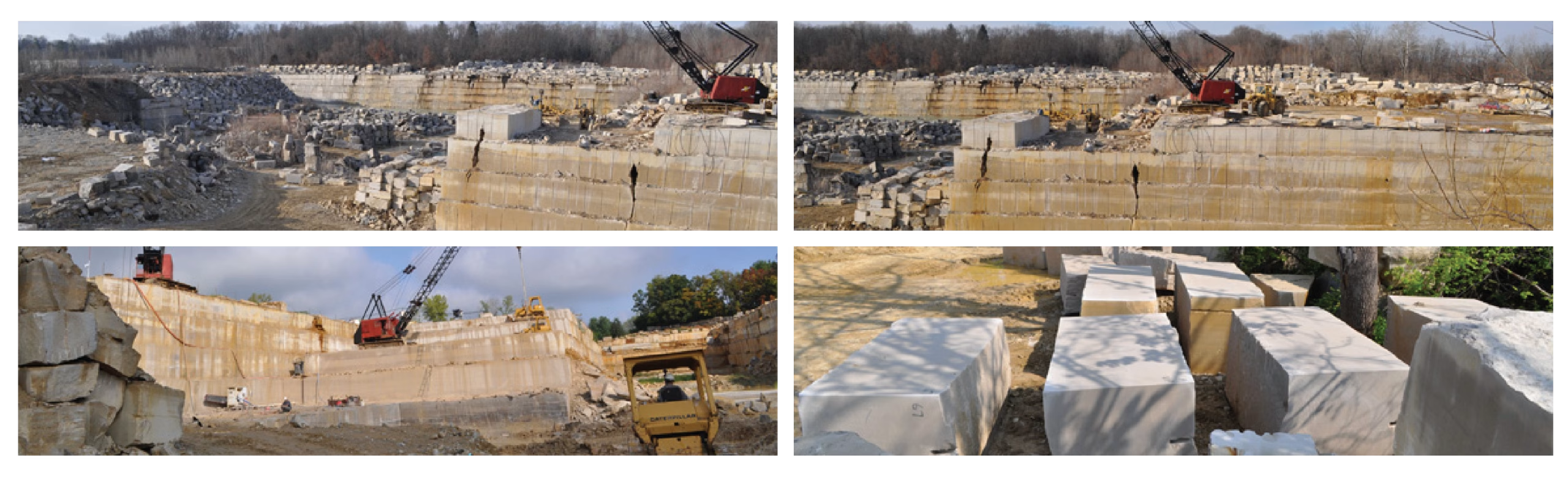
About | Reed Quarries, Inc. (2026). Reedquarries.Com. https://reedquarries.com/about/
The Reed story reflects Indiana Limestone’s long tradition of family-run quarrying, where knowledge and craftsmanship are passed down through generations. These families remain an important part of the stone’s enduring legacy.
From Independent Quarries to a Modern Industry
For much of its history, Indiana’s limestone industry consisted of numerous independent quarry companies, mills, and family businesses. As the industry developed, consolidation became increasingly common.
One major milestone came in 1926 with the formation of Indiana Limestone Company, which brought together predecessor companies that had been quarrying limestone since the mid-1800s. The company went on to become one of the most recognized names associated with Indiana Limestone.
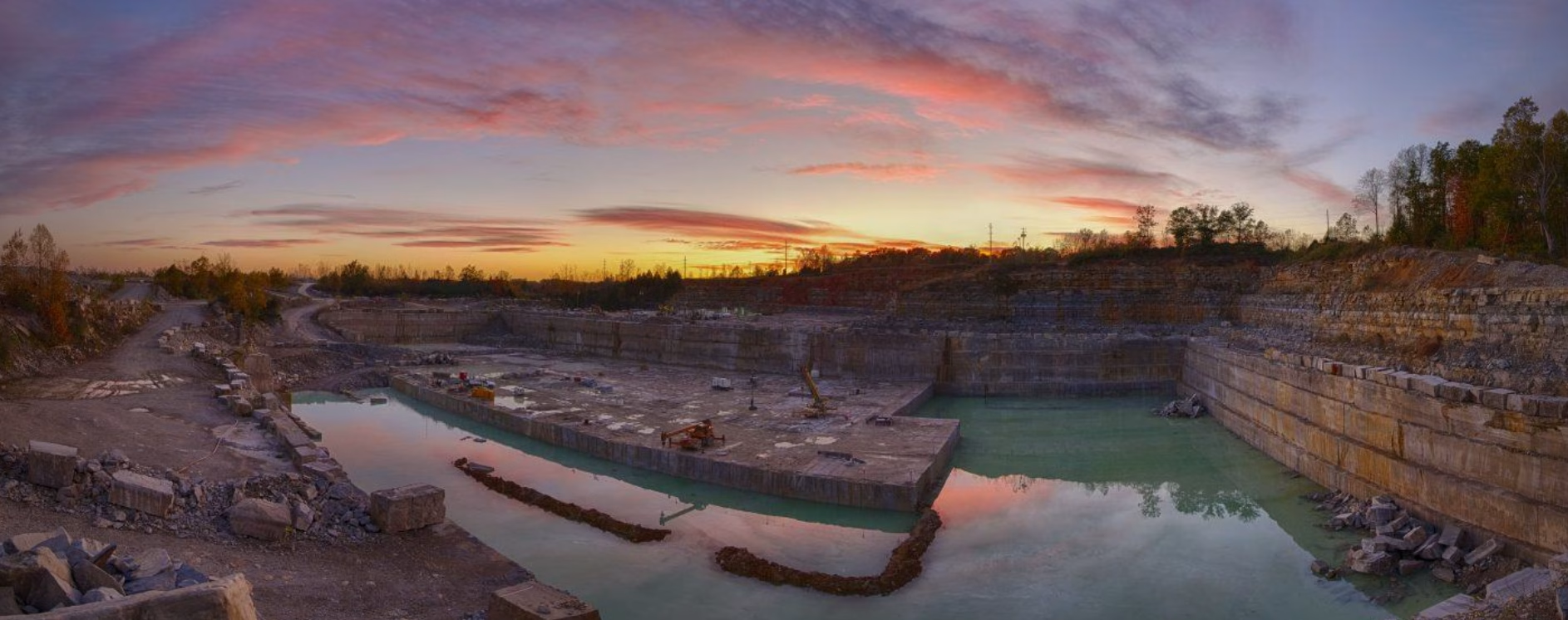
Indiana Limestone Company. (2017, August). Indiana Limestone Company. https://www.indianalimestonecompany.com/
Changing architectural trends and competition from modern materials led to a decline in Indiana Limestone demand and active quarries. However, its durability, timeless appearance, and proven history continue to make it a valued choice for new construction, restoration, and residential projects.
Indiana Limestone Today
Today, the Indiana Limestone industry looks very different from the quarrying landscape of the 1800s, but the connection between the stone and its history remains.
A major development came in 2018, when Polycor, a Quebec-based natural stone company, acquired Indiana Limestone Company. The acquisition brought Indiana Limestone into a much larger network of natural stone quarries and manufacturing operations across North America.

Indiana Limestone Company - Polycor Inc. (2023, April 25). Polycor Inc. https://www.polycor.com/legacy-brands/indiana-limestone-company/
Today, Indiana Limestone is part of Polycor’s extensive natural stone portfolio, serving architectural, commercial, residential, and landscape projects. While modern technology has transformed the industry, family-owned quarries like Reed Quarries continue to preserve its traditions and craftsmanship.
Indiana Limestone at Timeless Stonework
At Timeless Stonework, we work with Indiana Limestone as a material that connects historic craftsmanship with contemporary architecture.
We offer Indiana Limestone in a variety of finishes and applications, including Split Face, Rubble, Smooth Panels, Sills and Copings, and Profile Cut Stone, allowing designers and builders to select a finish that complements the character of their project.
From 19th-century quarries to modern architectural projects, Indiana Limestone remains a symbol of craftsmanship, durability, and permanence. Its legacy lives on in iconic buildings across North America and through the quarry families who continue its tradition today.
Ready to explore Indiana Limestone for your next project? Contact Timeless Stonework to discuss the right stone, finish, and application for your design.
Yuan Lei Embellado, B.Arch.Sc.
Construction Coordinator, Timeless Stonework